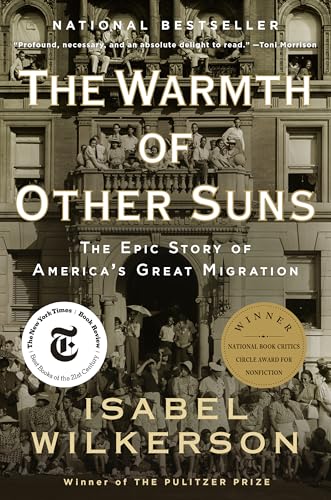
One of the most consequential yet overlooked chapters of American history unfolds through the personal narratives of three individuals who dared to leave everything behind in search of dignity, opportunity, and freedom. This sweeping chronicle reveals how millions of African Americans departed the Jim Crow South between 1915 and 1970, fundamentally reshaping the nation's demographic, cultural, and political landscape.
This historical epic transcends conventional storytelling by weaving together meticulous research with intimate human narratives. Rather than presenting statistics and dates in isolation, the narrative follows three compelling life stories across decades, allowing readers to experience the motivations, struggles, and triumphs of ordinary people making extraordinary decisions. Through their eyes, we witness the grinding poverty, systematic oppression, and constant danger that characterized life in the segregated South, and we understand viscerally why millions chose to risk everything for an uncertain future.
What emerges is a profound exploration of human resilience and the fundamental desire for self-determination. The three protagonists—each representing different destinations and different outcomes—illuminate the complex realities of seeking a better life. Their journeys take readers from the cotton fields and dirt roads of Mississippi, Louisiana, and Georgia to the industrial centers of Chicago, Los Angeles, and Philadelphia. Along the way, we encounter the obstacles they faced: discrimination in housing, hostility from those who feared economic competition, the psychological toll of leaving family and homeland, and the disorienting experience of navigating new cities and social systems.
For readers interested in personal transformation and social consciousness, this narrative offers crucial context for understanding contemporary American society. The migration fundamentally altered voting patterns, gave rise to significant political power bases, influenced music and popular culture, and created tensions that continue to reverberate through our communities today. By understanding the historical roots of current racial and economic divisions, readers gain essential perspective on how past decisions and systems continue to shape present realities.
The research underlying these narratives is extraordinary. Thousands of interviews were conducted, archives were thoroughly examined, and court documents were reviewed to construct this comprehensive picture. This scholarly rigor ensures that the personal stories rest on a foundation of historical accuracy and completeness. The result is both intellectually satisfying and emotionally moving.
More importantly, this work challenges readers to confront uncomfortable truths about American society and to recognize the agency and dignity of those who have been marginalized or overlooked by mainstream historical accounts. It demonstrates how individual choices, when multiplied across millions of people, create seismic shifts in society. It also illustrates how systemic barriers and discrimination, even when not overtly acknowledged, structure people's options and outcomes.
For those pursuing personal growth and social consciousness, this narrative provides invaluable lessons about courage, perseverance, and the price of seeking freedom and equality. It illuminates how personal decisions are always embedded within larger social, economic, and political systems. It shows how people respond to injustice—some with quiet dignity, some with determined optimism, and some with bitter regret.
Furthermore, the work connects historical migration to contemporary issues of displacement, inequality, and the ongoing struggle for racial justice and economic opportunity. By grounding abstract historical forces in human experience, it helps readers develop deeper empathy and understanding for the diverse experiences within American communities.
This historical examination ultimately serves as both a mirror and a window: a mirror reflecting the values and systems we have inherited and continue to perpetuate, and a window into the resilience, sacrifice, and aspirations of those who sought to build better lives. For anyone committed to understanding America's true history and creating a more just society, this narrative is indispensable reading.