
# Understanding Democracy in the Digital Age: A Critical Examination of Power and Participation
In our interconnected world, the internet promised to revolutionize democracy itself. Digital technologies seemed to offer unprecedented opportunities for ordinary citizens to participate in political discourse, challenge established power structures, and reshape the democratic process from the ground up. Yet beneath this optimistic vision lies a more complex and sobering reality that demands our critical attention and careful examination.
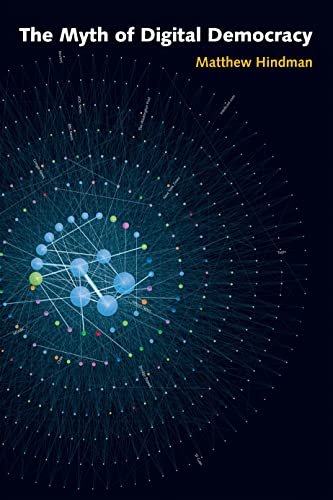
This essential work challenges the widespread assumption that technological access automatically translates into democratic empowerment. Through rigorous research and compelling analysis, readers are invited to reconsider their fundamental beliefs about how the internet influences political participation, public opinion formation, and the distribution of power within democratic systems. The narrative systematically deconstructs the popular mythology surrounding digital engagement while offering evidence-based insights into the actual mechanisms through which online technologies reshape political landscapes.
The central exploration reveals how the internet, despite its theoretical potential for democratization, has largely reinforced existing patterns of political inequality and elite dominance. Rather than creating level playing fields where all voices carry equal weight, digital platforms have often amplified the advantages already possessed by wealthy individuals, well-funded organizations, and established institutions. This counterintuitive finding challenges readers to examine their assumptions about technology as a force for social transformation and to recognize how structural inequalities persist and even intensify within supposedly open digital spaces.
One crucial insight addresses the question of political attention and information discovery. The sheer volume of content available online creates what researchers call the "attention economy," where influence flows not to the most qualified or virtuous voices, but to those who already possess resources to capture and direct public focus. Large organizations with substantial budgets can purchase advertising, employ sophisticated public relations teams, and dominate search engine rankings, while grassroots voices struggle for visibility despite having equal access to publishing platforms. Understanding this dynamic proves essential for anyone seeking to navigate digital information landscapes with genuine critical consciousness.
The examination extends to how digital technologies influence electoral politics and policy formation. Rather than empowering diverse coalitions of ordinary citizens, online organizing tools have often served to mobilize existing constituencies and reinforce ideological polarization. The promise of technology to create new forms of collective action and democratic participation has frequently fallen short, with digital platforms demonstrating limited capacity to translate online engagement into meaningful policy changes or sustained political power for marginalized communities.
For readers committed to personal growth and social consciousness, this material offers profound implications. Understanding how digital systems actually function—beyond marketing narratives and utopian rhetoric—enables more sophisticated participation in democratic processes. Recognizing the limitations of online activism motivates deeper engagement with community organizing, relationship building, and systemic change strategies that extend beyond digital spaces. This knowledge becomes empowering rather than discouraging when it clarifies where genuine power resides and where authentic transformation actually occurs.
The work encourages readers to develop what might be called "technological literacy"—not merely the ability to use digital tools, but critical awareness of how these technologies shape information flows, concentrate power, and influence democratic participation. Such literacy represents an essential component of conscious citizenship in contemporary society.
Furthermore, the analysis prompts important personal reflection about how individuals relate to digital platforms and information consumption. Recognizing the limitations of online engagement as a path to democratic change can redirect energy toward activities with greater potential for meaningful impact. This reorientation supports both personal authenticity and collective transformation.
Ultimately, this critical examination serves those seeking to understand and participate authentically in democratic systems. By dispelling illusions about digital technology as a democratic panacea, it opens space for more realistic and effective approaches to building genuinely inclusive, responsive, and equitable political systems. For spiritually and socially conscious readers, this represents an invitation to move beyond technological optimism toward grounded, embodied engagement with democratic participation and social change.