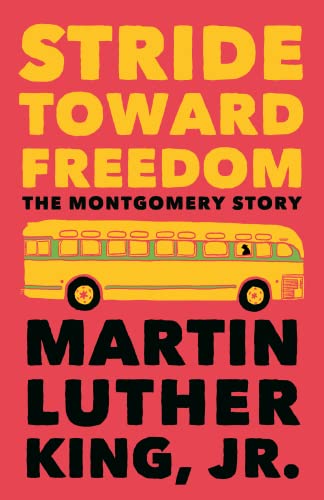

The struggle for civil rights emerges from the deepest wells of human conscience and spiritual conviction. This powerful memoir takes readers directly into the heart of one of history's most pivotal movements, revealing how an ordinary minister became an extraordinary force for social change. Through personal reflection and historical narrative, the work illuminates the philosophical and spiritual foundations that sustained a movement transforming an entire nation.
Readers will discover the formative experiences that shaped a young man's understanding of injustice and inequality. The narrative begins in the American South during a period of legally enforced racial segregation, painting a vivid picture of the daily humiliations, institutional barriers, and systemic violence that defined life under Jim Crow. Rather than presenting these realities from a distant, academic perspective, the account brings you into intimate moments—family conversations, educational experiences, and personal awakenings—that reveal how conviction develops when confronted with systemic wrongdoing.
The central narrative focuses on the Montgomery Bus Boycott, a defining moment when ordinary citizens refused to participate in their own oppression. What emerges is not a story of a single heroic figure leading passive followers, but rather an account of community mobilization, strategic planning, and collective courage. The detailed account of how the boycott unfolded demonstrates the practical mechanics of nonviolent resistance. Readers learn about the careful organization required to sustain a year-long campaign, the emotional and financial toll on participants, the internal debates about strategy, and the moral reasoning behind choosing nonviolence even when facing violence.
One of the most valuable aspects of this work is its philosophical grounding. The narrative explores how religious faith, theological education, and intellectual study of thinkers like Mahatma Gandhi provided the intellectual framework for nonviolent action. The work addresses a question many readers grapple with: how do you maintain moral conviction when facing injustice? How do you respond to violence with restraint? These are not abstract philosophical questions but lived dilemmas faced by real people making daily choices in dangerous circumstances.
The spiritual dimension of the movement receives particular attention. Rather than treating social activism as purely political, the account reveals how religious faith functioned as the engine driving change. This perspective speaks directly to readers seeking to understand how personal spiritual development connects to social responsibility. The work demonstrates that transformation of society begins with transformation of the human heart and conscience.
Readers will also confront the reality of opposition, doubt, and fear. The narrative doesn't sanitize history or present the movement as inevitable or universally popular. Instead, it acknowledges the genuine threats faced by activists, the economic pressures on Black businesses and workers, the criticism from those who felt the movement was too radical or too moderate, and the personal struggles with doubt that even committed leaders experienced. This honest portrayal makes the achievements all the more remarkable and provides contemporary readers with models for persisting through opposition.
The broader implications for democracy and human society form another crucial thread. The work explores fundamental questions about citizenship, constitutional rights, and the responsibility of communities to correct injustice. These questions remain vital today as societies continue wrestling with inequality, discrimination, and the proper response to systemic wrongdoing.
For readers seeking to understand how personal conviction translates into social change, how spiritual principles can guide political action, and how ordinary people accomplish extraordinary transformation, this memoir offers both inspiration and practical wisdom. The lessons extend far beyond the specific historical moment, speaking to contemporary struggles for justice and human dignity across contexts and communities.