
Happiness & Success
Achieving Happiness Through Acceptance of Life
The quest for happiness often leads to frustration, as many fail to realize that the...








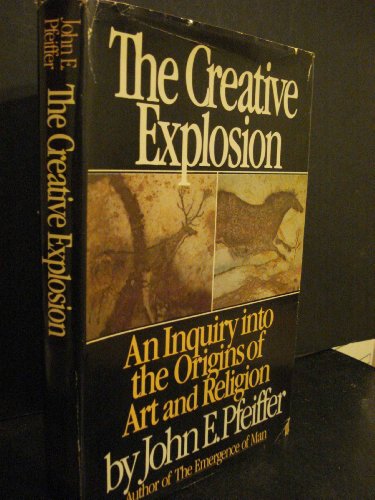
Between thirty and forty thousand years ago, something extraordinary happened to human consciousness. Our ancestors, who had survived for millennia through basic hunting and gathering, suddenly burst forth with unprecedented creative expression. Cave walls became canvases for magnificent artwork. Simple tools evolved into sophisticated instruments. Symbolic thinking, complex language, and abstract thought emerged with stunning rapidity. This transformative period represents nothing less than the birth of modern human consciousness, and understanding it offers profound insights into unlocking our own creative potential today.
This groundbreaking exploration takes readers on a journey through one of humanity's most pivotal transformations, examining the archaeological evidence, anthropological discoveries, and cognitive leaps that defined our species' emergence as truly creative beings. Through vivid descriptions of prehistoric cave art, intricate burial practices, and revolutionary tool-making techniques, we witness the awakening of qualities that define us as human: imagination, symbolic reasoning, and the ability to create meaning beyond mere survival.
For readers seeking personal empowerment and transformation, this work offers far more than a history lesson. It provides a mirror into the fundamental nature of human creativity and consciousness itself. By understanding how our ancestors made this quantum leap in cognitive capability, we gain insights into our own untapped potential. The same neural pathways and creative capacities that allowed Ice Age humans to create stunning artwork and develop complex social structures remain embedded in our modern brains, often dormant and waiting to be activated.
Read more ▼
Richard Treadgold

Linda Kohanov
Derrick Jensen

Pedro Domingos
The quest for happiness often leads to frustration, as many fail to realize that the...

Reaching sixty can evoke complex emotions, blending relief with ongoing ambition. This...

The quest for life's purpose often leads to unsatisfactory answers. This article...

Romantic love is a complex emotion shaped by historical, cultural, and biological...

Imagine going through one of the most physically and emotionally demanding experiences...

Daily actions often conflict with personal beliefs due to past experiences. By utilizing...

Have you ever argued over something that wasn't actually said? From cultural differences...

Therapists often use dream interpretation to delve into patients' emotions, but true...