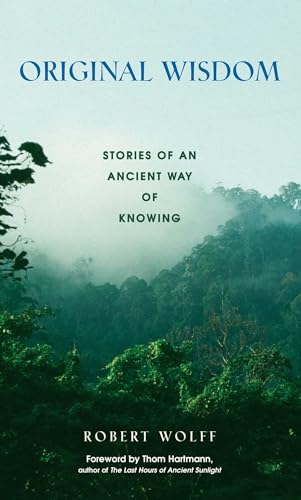

Deep within human consciousness lies a way of knowing that modern civilization has nearly erased. This exploration reveals how indigenous cultures maintained a profound connection to consciousness, community, and the natural world that Western society abandoned centuries ago. What you will discover in these pages challenges everything you thought you knew about human potential and the nature of awareness itself.
The fundamental premise here is both simple and revolutionary: the people we have labeled as "primitive" or "underdeveloped" actually possessed sophisticated understandings of consciousness and interconnection that our advanced technological society has lost. Rather than viewing indigenous knowledge as antiquated superstition, this work invites you to reconsider it as genuine wisdom about how reality actually functions and how humans can live in genuine harmony with existence.
The narrative unfolds through personal encounters and reflections drawn from time spent among the Sng'oi people of the Malay Peninsula. Through these firsthand accounts, readers gain intimate access to a radically different way of perceiving the world and one's place within it. The observations are not presented as romanticized fantasies but as honest documentation of how another consciousness framework operates in practice. You will learn how these communities experience reality as fundamentally interconnected, where the boundaries between self and other, human and nature, conscious and unconscious become fluid and permeable rather than fixed and separate.
One of the most transformative insights concerns how indigenous cultures maintain what might be called "original participation" with the world around them. Unlike modern consciousness, which treats the observer as separate from the observed, this older mode of awareness involves genuine participation in the unfolding of events. This has profound implications for how you understand your own agency, responsibility, and creative power in shaping your life and the world.
The exploration delves into specific practices and ways of being that maintain this heightened state of awareness. You will discover how communities that lack written language, formal institutions, and technological infrastructure develop remarkable qualities of attention, memory, and intuitive understanding. Rather than viewing these abilities as mysterious or supernatural, the work shows how they emerge naturally when consciousness is organized around different priorities and practices. These insights offer practical value for anyone seeking to expand their own perceptual and cognitive capacities in an age of distraction and fragmentation.
A central theme involves understanding how the development of writing, abstract thinking, and technological tools fundamentally altered human consciousness itself. This is not presented as progress or regress but as transformation with both gains and losses. Modern consciousness gained tremendous advantages in abstraction, accumulated knowledge, and technological power, yet sacrificed the immediate presence, interconnectedness, and participatory awareness that characterized earlier human experience. Recognizing this trade-off becomes crucial for anyone seeking to recover lost dimensions of awareness while maintaining the benefits of contemporary knowledge.
The significance of this material extends far beyond academic interest or cultural curiosity. In our current era of ecological crisis, psychological fragmentation, alienation, and disconnection, understanding what was lost becomes essential for determining what might be recovered. As you encounter this alternative consciousness framework, you will find yourself questioning fundamental assumptions about what is normal, rational, or possible for human awareness. This questioning opens space for genuine transformation.
For those committed to personal growth and spiritual development, this work provides an invaluable mirror. By encountering a radically different way of being human, you gain perspective on your own conditioning and the possibility of reorganizing your consciousness differently. The specific practices, attitudes, and ways of relating described here offer concrete models for developing greater presence, connection, and alignment with the deeper dimensions of existence that modern life tends to obscure.
Ultimately, this exploration serves as both invitation and provocation. It invites you to question whether progress and development have genuinely served human flourishing, and it provokes consideration of what elements of original wisdom might be reintegrated into contemporary life. For anyone seeking authentic personal empowerment grounded in alignment with reality as it truly is, this work offers profound and liberating possibilities.