
Happiness & Success
Achieving Happiness Through Acceptance of Life
The quest for happiness often leads to frustration, as many fail to realize that the...








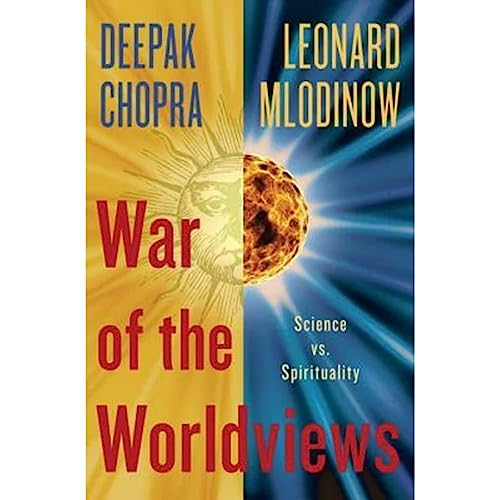
At the intersection of science and spirituality lies one of humanity's most profound debates: What is the nature of reality, and how do we understand our place within it? This groundbreaking dialogue brings together two brilliant minds from opposite ends of the intellectual spectrum to explore questions that have shaped civilizations, influenced governance, and determined how societies organize themselves around fundamental truths.
The conversation presented here transcends mere academic debate. It delves into the very foundations of how we construct meaning, make decisions about our collective future, and determine what constitutes legitimate knowledge in public discourse. These questions have immediate relevance to how democratic societies function, how policy decisions are made, and how citizens engage with complex issues ranging from healthcare to environmental stewardship.
Through a series of spirited exchanges, readers encounter competing perspectives on consciousness, the origins of the universe, the nature of life, evolution, the brain and mind connection, quantum physics, and what it means to be human. One voice advocates for a purely materialist, scientific understanding of existence, arguing that physical laws and empirical evidence provide the only reliable path to truth. The opposing viewpoint suggests that consciousness itself is fundamental to reality, that spiritual dimensions of existence are not only valid but essential to understanding the full spectrum of human experience.
Read more ▼
Timothy Snyder

The nine steps to financial freedom
Suze Orman
Outliers: The Story of Success
Malcolm Gladwell, Malcolm Gladwell
Alex Korb PhD, Daniel J. Siegel MD
The quest for happiness often leads to frustration, as many fail to realize that the...

Reaching sixty can evoke complex emotions, blending relief with ongoing ambition. This...

The quest for life's purpose often leads to unsatisfactory answers. This article...

Romantic love is a complex emotion shaped by historical, cultural, and biological...

Imagine going through one of the most physically and emotionally demanding experiences...

Daily actions often conflict with personal beliefs due to past experiences. By utilizing...

Have you ever argued over something that wasn't actually said? From cultural differences...

Therapists often use dream interpretation to delve into patients' emotions, but true...