
Happiness & Success
Achieving Happiness Through Acceptance of Life
The quest for happiness often leads to frustration, as many fail to realize that the...








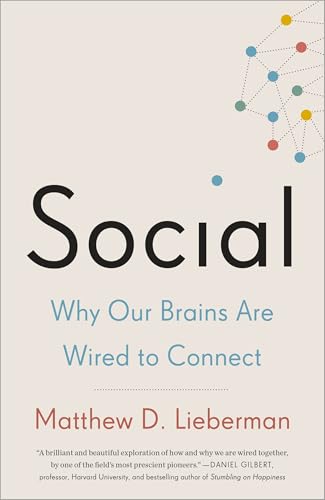
Our brains are wired to connect. This fundamental truth about human nature reveals why our relationships matter more than we ever imagined and why social pain feels just as real as physical pain. Drawing on groundbreaking neuroscience research, this work illuminates the biological imperative behind our need for social connection and demonstrates how our capacity for collaboration and empathy has been the defining feature of human evolution and success.
For decades, we've been taught to value intelligence, rational thinking, and individual achievement above all else. We've structured our educational systems, workplaces, and even our understanding of personal success around these principles. Yet cutting-edge brain imaging studies reveal a startling revelation: when our minds are at rest, when we're not focused on specific tasks, they default to thinking about other people and our social world. This isn't a distraction or weakness—it's a fundamental feature of how our brains are designed to operate.
The neural networks dedicated to understanding others, predicting their thoughts and feelings, and navigating social situations are among the most sophisticated systems in the human brain. These networks consume enormous energy and develop earlier and more robustly than many other cognitive capacities. Far from being secondary to our "thinking" abilities, our social intelligence represents perhaps our most important and uniquely human capability.
Read more ▼
Joe Simpson, Joe Simpson

Ram Dass.

Madhu Suri Prakash, Gustavo Esteva

Emily Dickinson
The quest for happiness often leads to frustration, as many fail to realize that the...

Reaching sixty can evoke complex emotions, blending relief with ongoing ambition. This...

The quest for life's purpose often leads to unsatisfactory answers. This article...

Imagine going through one of the most physically and emotionally demanding experiences...

Romantic love is a complex emotion shaped by historical, cultural, and biological...

Daily actions often conflict with personal beliefs due to past experiences. By utilizing...

Have you ever argued over something that wasn't actually said? From cultural differences...

Therapists often use dream interpretation to delve into patients' emotions, but true...