


Happiness & Success
Achieving Happiness Through Acceptance of Life
The quest for happiness often leads to frustration, as many fail to realize that the...








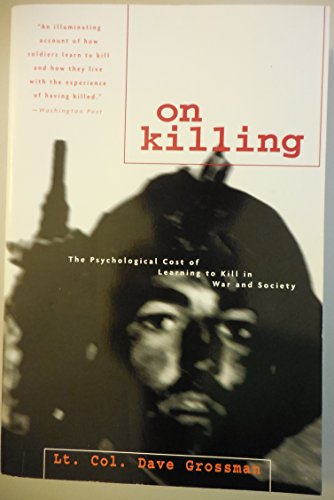
Understanding the psychological mechanisms that enable human beings to overcome their natural resistance to killing offers profound insights into human nature, consciousness, and the potential for both violence and peace. This groundbreaking exploration draws on military history, psychology, and firsthand accounts to reveal a startling truth: the vast majority of human beings possess a powerful, innate resistance to taking another person's life, even in combat situations where their own survival depends upon it.
Through meticulous research spanning multiple wars and conflicts, readers discover that throughout history, a remarkably small percentage of soldiers actually fired their weapons with intent to kill, even when facing enemy combatants. This revelation challenges conventional assumptions about human aggression and warfare while opening a window into the deepest aspects of our psychological makeup. The resistance to killing appears to be hardwired into our species, transcending culture, era, and circumstance—a finding that carries profound implications for understanding human consciousness and our capacity for empathy.
The exploration delves into the psychological costs exacted when this natural resistance is overcome through conditioning and training methods. Readers gain understanding of how modern military training has evolved to systematically desensitize soldiers and enable them to kill more effectively in combat. These techniques mirror methods found in operant conditioning and behavioral psychology, raising crucial questions about the malleability of human nature and the ethical dimensions of psychological manipulation.
Read more ▼
The quest for happiness often leads to frustration, as many fail to realize that the...

Reaching sixty can evoke complex emotions, blending relief with ongoing ambition. This...

The quest for life's purpose often leads to unsatisfactory answers. This article...

Romantic love is a complex emotion shaped by historical, cultural, and biological...

Imagine going through one of the most physically and emotionally demanding experiences...

Daily actions often conflict with personal beliefs due to past experiences. By utilizing...

Have you ever argued over something that wasn't actually said? From cultural differences...

Therapists often use dream interpretation to delve into patients' emotions, but true...