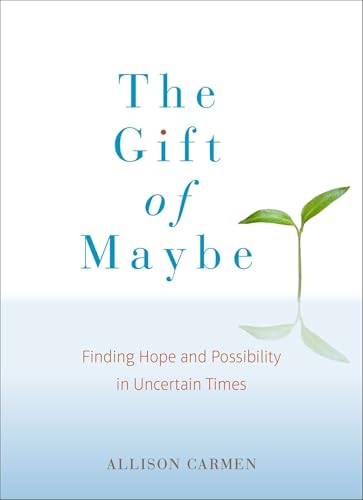
Imagine having a tool that could instantly transform anxiety into peace, worry into calm, and fear into possibility. This transformative approach centers on a deceptively simple yet profoundly powerful practice: embracing uncertainty by responding to life's challenges with two words—"or maybe."
When faced with troubling situations, our minds instinctively jump to worst-case scenarios. We lose sleep over potential disasters that haven't happened, constructing elaborate narratives about terrible outcomes we treat as inevitable facts. This mental habit creates unnecessary suffering, draining energy and joy from present moments. What if there were a way to interrupt this destructive pattern and open ourselves to infinite possibilities?
At the heart of this philosophy lies a recognition that we simply don't know what the future holds. Despite our brain's insistence on certainty and prediction, life remains fundamentally unpredictable. Every situation contains multiple potential outcomes—some better than we could imagine, others different from our fears, and still others we haven't even considered. By acknowledging this basic truth, we free ourselves from the prison of assumed outcomes.
The practice involves catching yourself in moments of negative prediction and gently offering an alternative perspective. When thinking "This is going to be terrible," pause and add "or maybe it won't be." When convinced "I'll never recover from this setback," consider "or maybe this will lead somewhere unexpected." This isn't about forced positive thinking or denying legitimate concerns. Instead, it creates mental space for possibility, allowing us to hold our fears more lightly while remaining open to other outcomes.
Readers discover how this approach applies across all life domains—relationships, career transitions, health concerns, financial worries, and personal growth challenges. Through real-world examples and practical guidance, the material illustrates how embracing uncertainty paradoxically creates more peace than desperately seeking guarantees. When we release our grip on needing to know exactly how things will unfold, we stop exhausting ourselves with futile attempts at control.
The methodology draws on both ancient wisdom traditions and contemporary psychological insights. Many spiritual practices emphasize present-moment awareness and acceptance of what we cannot control. Modern research on anxiety and stress confirms that much of our suffering stems from rumination about uncertain futures. By bridging these perspectives, readers gain both philosophical understanding and concrete techniques for implementation.
One particularly valuable aspect addresses the difference between responsible planning and anxious obsession. Taking reasonable precautions and making thoughtful decisions differs entirely from spinning in endless worry loops. Learning to discern between productive action and unproductive mental spiraling helps readers channel energy more effectively. They discover how to prepare without drowning in "what if" scenarios that may never materialize.
The material also explores how our relationship with uncertainty affects those around us. When we model peaceful acceptance of not knowing, we give others permission to release their own anxiety. Parents discover how to guide children through disappointments without catastrophizing. Partners learn to support each other through changes without amplifying fears. Leaders find ways to navigate organizational challenges while maintaining team morale during ambiguous times.
Perhaps most importantly, embracing uncertainty opens us to opportunities we might otherwise miss. When convinced we know how things must unfold, we close ourselves to alternatives. Unexpected doors remain unnoticed, creative solutions go unexplored, and potential connections pass us by. Maintaining an open, curious stance toward the unknown allows serendipity and synchronicity to work in our lives.
Readers emerge with a practical tool they can implement immediately, regardless of circumstances or background. No special training, expensive equipment, or extensive time commitment is required. Simply remembering to add "or maybe" when caught in certainty about negative outcomes begins shifting perspective and reducing anxiety.
This approach offers genuine empowerment—not through controlling outcomes, but through transforming our relationship with the uncontrollable aspects of existence. By making peace with uncertainty, we reclaim energy previously wasted on worry and redirect it toward living fully in the present moment.