
Happiness & Success
Achieving Happiness Through Acceptance of Life
The quest for happiness often leads to frustration, as many fail to realize that the...








 "I have a dream!" Most of us are familiar with this now famous line of Martin Luther King as he spoke of his vision for the United States and for mankind in general. He had faith in his dream, in his vision. What was your dream, your vision of your future when you were younger?
 When we look within ourselves for sources of power and qualities such as fearlessness and resilience, our heart is not the first or most immediate place that comes to mind. Indeed, the mind--the seat of our mental and logical reasoning--tells us that relying on the heart’s energies might make us weaker...
 NBA players who use Twitter or other forms of social media late at night don’t perform as well on the court the next day, a new study shows. A player’s shooting percentage was 1.7 percentage points lower following a night during which he tweeted during typical sleeping hours. Late-night tweeting was also associated with approximately 1.1 fewer points scored and 0.5 fewer rebounds in the next day’s game.

As Bear sang his song the darkness began to shrink down into nothing and very soon it was gone as quickly as it arrived. Creator stood in front of Bear and said, “I am happy you have found the answer to the darkness. I have always been with you. My energy flows through the top of your head down to your heart and meets the Earth’s energy fusing together to create light. This light, combined with your voice, is like a tapestry woven together as a protection from all evil.”
 Taking responsibility for ourselves includes taking a look at what is really bothering us, why we feel blasé about life, and choosing to make changes in our attitudes and our actions. Ask yourself the following questions: Am I enthusiastic about life? Do I wake up excited to face another day?
 In the world that we live in now, with ecological destruction for the sake of material possessions and with the divisions among humanity, a return to our wu-wei nature is imperative, or we will face the dire consequences of our ignorant actions.
 You have probably never heard of William Kingdon Clifford. He is not in the pantheon of great philosophers – perhaps because his life was cut short at the age of 33 – but I cannot think of anyone whose ideas are more relevant for our interconnected, AI-driven, digital age.
 Memories and responses to living are passed through your genes from one generation to another. Limited thinking, encouraged and taught to your ancestors, is imprinted in the cells of your body. Everything you deal with in daily living is recorded and stored in your physical body, and just because you do not consciously remember your experiences does not mean the cells of your body forget.

When we’re in severe or chronic pain, our normal life is not available to us in the way it used to be. Instead, living in pain feels like being taken out of life. Our normal life recedes to a distance at the same time that the feeling world of pain becomes incredibly close, immediate, and demanding. Pain becomes our experience of life.
 The current approach today is essentially we’ve entered into a culture of freneticism—that’s a Big Think word, and that means we’re really busy. But I believe we’ve created the business on ourselves.

For decades, personality psychologists have noticed a striking, consistent pattern: extroverts are happier more of the time than introverts. For anyone interested in promoting wellbeing, this has raised the question of whether it might be beneficial to encourage people to act more extroverted. Evidence to date has suggested it might.

Do you believe that the universe operates at random, or is there a higher intelligence that orchestrates encounters, events, and a stream of destiny? After observing many uncanny synchronicities, I have a firm belief that, despite appearances of haphazardness, a brilliant and loving hand guides us to our right place at the right time for the right purpose.

The path with heart has no set of predictable moves to ensure success. It is not a set of routines or a prescription of step-by-step actions; it is a philosophy, a way of seeing and being in the world that leads you to your life task, the contribution that spirit asks you to make.
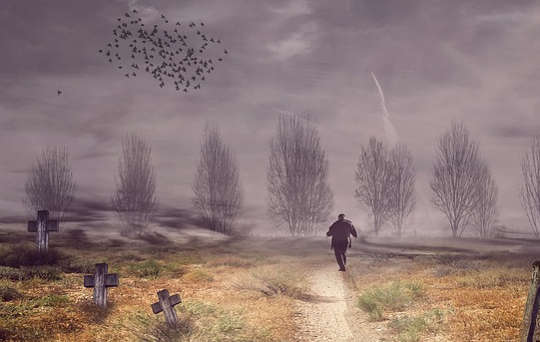
Contemplate how a person’s life would be changed by starting to hear or see things others can’t. Now imagine it could offer something good. Clinical psychologist Lily Dixon and her team detail the experiences of seven people who have lived with verbal or auditory hallucinations; amid the struggles, the researchers report, their journeys have also taken them to some positive places.
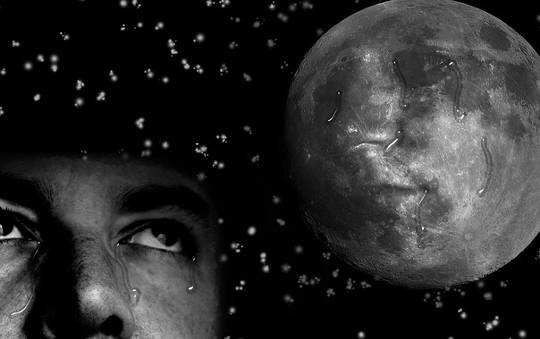
Heaven and hell both exist on this planet today. This day. There is not some day in the future where our free agency to make any choices that we want will be locked down. Where there will be a judgment made, and some eternal status assigned to us. We will not be “assigned” a heaven or hell experience. It is us, the human beings, who decide the fate of humanity.

Talk to high-school students preparing for their science exams, and you’ll probably hear two things: that they’re scared of physics, and relatively comfortable with biology. Strangely, this is contrary to the view of most researchers.

I am not some enlightened being trying to guide you on a journey he has already completed. That is an old model, partaking of a kind of spiritual hierarchy based on a linear conception of the evolution of consciousness. In the present transition, each of us is pioneering a unique part of the territory of Reunion. In keeping with that, I must offer you my doubt and conflict along with my insight.

Every now and then I come across an affirmation that really 'hits home'. One of these is "I think and speak only words of love". I found this one in Louise Hay's book "Heal Your Body." When I started using this affirmation, I immediately saw and felt its power-full effects.

Success and failure only have to do with ego. The soul is busy taking a journey and having experiences from which it will learn. It knows nothing of success and failure. The soul only knows truth, honesty, and integrity...

The structured nature of cognitive behavioural therapy (CBT) and its clearly defined principles (based on the links between thoughts, feelings and behaviours) make it relatively easy to train practitioners, ensure standardised delivery and measure outcomes.

Roger Fisher (1922–2012) served as a reconnaissance pilot in World War II and then graduated from Harvard Law School, becoming a professor there in 1958. Witnessing maiming and death firsthand during the war and then seeing the destructive effects of costly, protracted litigation as a partner in a major law firm, Fisher was passionate about finding more creative alternatives to resolve conflict.
The quest for happiness often leads to frustration, as many fail to realize that the...

Reaching sixty can evoke complex emotions, blending relief with ongoing ambition. This...

The quest for life's purpose often leads to unsatisfactory answers. This article...

Have you ever argued over something that wasn't actually said? From cultural differences...

Imagine going through one of the most physically and emotionally demanding experiences...

Romantic love is a complex emotion shaped by historical, cultural, and biological...

Daily actions often conflict with personal beliefs due to past experiences. By utilizing...

Therapists often use dream interpretation to delve into patients' emotions, but true...