
Happiness & Success
Achieving Happiness Through Acceptance of Life
The quest for happiness often leads to frustration, as many fail to realize that the...









Although the healing process can really occur in three simple steps — find your willingness to see differently, give your willingness to your Inner Therapist, and trust that it is done — I find that I often need more ways to separate myself from the ego because it hangs on so tightly. Or, perhaps, because I hang on to it so tightly.
 New research digs into how setbacks affect the pursuit of our goals, such as weight loss.
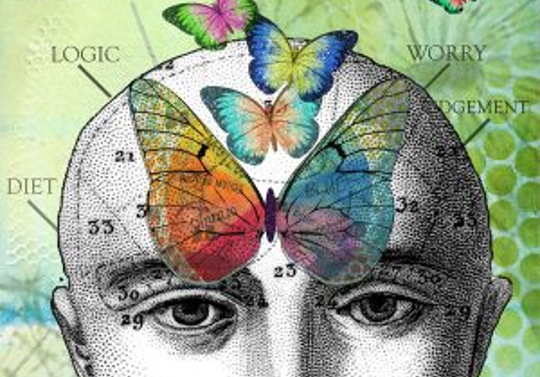
Benjamin Hardy emphasizes that shifting perspective on problems can significantly reduce their perceived intensity. By understanding that negative experiences can lead to growth, individuals can overcome hesitation and discover motivation through action. Recognizing the value of challenging emotions is crucial for personal development and adapting effectively to life’s hurdles.

The heart is a key concept in shamanism, a specialized term that refers to one’s deep source of aliveness, spiritual center, soul, or core. The word core itself comes from the French word coeur, meaning “heart.” It is understood to mean our individual, localized expression of the Great Spirit, God, or Universal Consciousness. It is our individual wave moving upon the greater sea of spirit.

Happiness is a crucial aspect of life, yet many struggle to achieve it. This article outlines practical inner and outer activities that can enhance joy, love, and peace. From self-affirmation and emotional expression to community engagement and nature appreciation, these strategies offer a comprehensive approach to cultivating happiness in everyday life.

I interviewed numerous people who have regrettable ink and most admit their decision to get a tattoo was impulsive and not really contemplated. Their experiences with having a bad tattoo included suffering from severe depression and panic attacks. Some people even resort to therapy and antidepressants over a bad tattoo.

Awakenings often arise from significant life events, leading to a journey of spiritual development and self-discovery. This process involves purgation, solitude, and a move away from ego, ultimately guiding individuals toward love and healing in relationships. Embracing these stages can foster deeper connections with oneself and others.

Most people who seek out Buddhism think that practice will enable them to eliminate their pain and provide them with a state of permanent happiness. But the reality is that all that Buddhist practice will do is help us develop the skills to cope with this constant dissatisfaction and not turn our pain into suffering.

Awareness is a crucial element in transforming life's experiences into wisdom and growth. By embracing our errors and weaknesses, we can refine our skills and enhance our understanding of ourselves. This journey requires the courage to face discomfort and the willingness to learn from our mistakes, ultimately leading to mastery in various aspects of life.

The right to believe what one wants is often misused to defend ignorance and misinformation. This article explores the ethical implications of belief, emphasizing the distinction between belief and knowledge, and the responsibilities that accompany the right to hold beliefs. It argues that while beliefs can be personal, they also shape societal attitudes and actions.

There is a meme that speaks directly to the hearts and minds of the overly self-conscious. Perhaps you’ve seen it; it goes something like this

Each of us passes through an array of experiences that creates a beautiful but complex weaving of life. Here is how you can find impressions from your past for the purpose of directing your future...

The journey from a fearful worldview to one of love and harmony involves recognizing the potential for peace among all beings. By changing perceptions, individuals can foster a reality where compassion prevails over violence. This article explores how upbringing and societal influences shape our beliefs about safety and coexistence.

Focusing on what truly matters in life can be transformative. By prioritizing passions and meaningful pursuits over urgent but trivial tasks, individuals can reclaim their sense of purpose and joy. Embracing this approach leads to a more fulfilling life, where the main thing remains the main thing.

In today's fast-paced world, carving out moments for quiet reflection is essential for mental health. Daily time-outs, whether through early mornings or simple strolls, can help reduce stress and enhance overall well-being. Embracing these pauses can lead to a more balanced and fulfilling life.

Exploring the significance of tattoo placement reveals how body art interacts with personal energy zones. Tattoos serve as energy imprints that can enhance or block the flow of chi, depending on their location and the intention behind them. A mindful approach to tattooing considers the holistic connection between body, mind, and spirit.

I understand why people feel unsettled, confused, and even frightened by what they observe going on in our world today. Everywhere we look we see chaos and change, disruption and destruction. We see suffering and privation; we see inequality and constriction of opportunity. We see a positive future for ourselves only dimly, at best.

The moment we can ask ourselves “Does this thought have anything to do with reality?” “Is this thought true?” we are starting to wake up. This understanding breaks the bondage, which is our total identification with thoughts, and empowers us to wake up from the dream state.
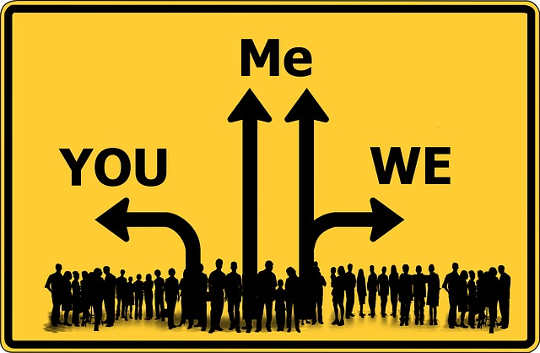
Endowing people with social power inflates the socially-toxic component of narcissism called exploitation and entitlement, according to new research.
Is control really helping you—or holding you back? Step into the neutral zone and learn why trust, not force, is the path to freedom.

Some of the first things that often need to be overcome when seeking to engage a higher degree of balance in one's life are the all-too commonly-held myths and misconceptions about Life Balance and how to achieve it. Here are four of the most prevalent ones in our society...
The quest for happiness often leads to frustration, as many fail to realize that the...

Reaching sixty can evoke complex emotions, blending relief with ongoing ambition. This...

The quest for life's purpose often leads to unsatisfactory answers. This article...

Have you ever argued over something that wasn't actually said? From cultural differences...

Imagine going through one of the most physically and emotionally demanding experiences...

Romantic love is a complex emotion shaped by historical, cultural, and biological...

Daily actions often conflict with personal beliefs due to past experiences. By utilizing...

Therapists often use dream interpretation to delve into patients' emotions, but true...