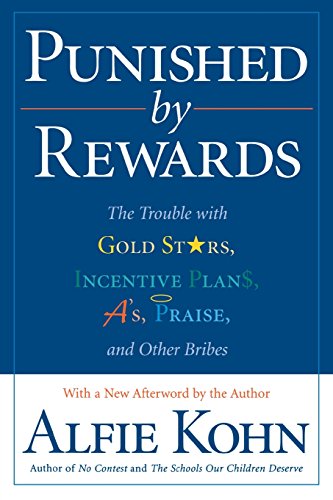



















What if the very tools we've designed to motivate people—from schoolchildren to employees to citizens—are actually undermining genuine motivation, eroding trust, and creating more problems than they solve? This groundbreaking exploration challenges one of our most fundamental assumptions about human behavior and social organization, revealing how reward systems have quietly reshaped our institutions, relationships, and sense of personal agency.
The central premise is both simple and startling: the widespread use of rewards as behavioral modification tools fundamentally misunderstands human nature and consistently produces counterintuitive results. Rather than inspiring better performance, deeper learning, or more ethical behavior, rewards often trigger the opposite effect. They reduce intrinsic motivation, encourage people to focus narrowly on gaining the reward rather than on the activity itself, and create dependency on external validation. This insight has profound implications for how we organize schools, workplaces, government systems, and democratic institutions.
The examination begins with the scientific research on motivation and behavior modification. Decades of psychological studies demonstrate that when external rewards are introduced into situations where people already have intrinsic motivation, that internal motivation typically declines. Children who loved drawing begin to see it as a means to an end rather than an inherent good. Students who were curious about learning become focused on grades. Workers who once took pride in their craftsmanship start viewing their labor primarily as a means to a paycheck. This phenomenon, well-documented in behavioral science, reveals a fundamental truth about human psychology: we are not simply rats in a cage, responding predictably to carrots and sticks.
Beyond the psychological dimension, this work explores how reward systems reshape entire institutions and democratic societies. When we design systems based on the assumption that people need external incentives, we create bureaucratic structures that demand constant monitoring, measurement, and control. Schools become test-focused institutions rather than spaces for genuine intellectual development. Workplaces emphasize output metrics over meaningful contribution. Government becomes preoccupied with compliance rather than fostering engaged citizenship. These systemic consequences matter deeply for anyone concerned with democracy, freedom, and authentic human flourishing.
The political and social implications are particularly significant. A society built on reward-and-punishment mechanisms is fundamentally different from one that cultivates intrinsic motivation and genuine commitment to collective well-being. When citizens are managed through incentives and penalties, they are not being treated as responsible agents capable of understanding complex issues and making thoughtful choices. This creates a crisis of democratic engagement, where people increasingly feel disconnected from decision-making processes and view their participation as either pointless or transactional.
The work demonstrates how this approach particularly affects vulnerable populations. Marginalized communities subjected to increased surveillance, conditional benefits, and reward-based compliance systems experience these mechanisms not just as ineffective but as dehumanizing. The implicit message of reward systems is that people cannot be trusted to do the right thing without external coercion—a message with particular sting for those already experiencing systemic distrust and discrimination.
Perhaps most importantly, this investigation offers an alternative vision. Rather than obsessing over rewards and punishments, we might focus on creating conditions where people naturally care about doing good work, learning deeply, and participating meaningfully in their communities. This requires trusting human nature, respecting autonomy, providing genuine choice, and building institutions around intrinsic motivation rather than external control.
For readers concerned with personal growth, social consciousness, and democratic renewal, this analysis provides essential insight into why our institutions often feel hollow and counterproductive. It invites a fundamental reimagining of how we approach motivation, education, work, and citizenship—one grounded in realistic psychology and genuine human dignity rather than behavioral manipulation.