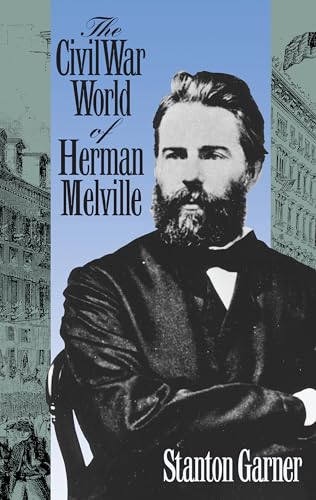


During one of America's darkest and most transformative periods, a profound literary mind grappled with the deepest questions of conscience, morality, and national identity. This exploration examines how one of America's greatest writers responded to the Civil War and what his artistic output during this tumultuous era reveals about the nation's soul and our ongoing struggles with justice, democracy, and human dignity.
The American Civil War represented far more than a military conflict between North and South. It was a fundamental clash of values, a testing ground for the nation's founding principles, and a moment when citizens had to confront uncomfortable truths about slavery, freedom, and what it truly means to be a democratic society. For those with sensitive moral consciences and intellectual depth, the war presented an agonizing challenge: how to understand and express the spiritual and philosophical dimensions of mass suffering, political fracture, and human brutality on an unprecedented scale.
This period of American history matters profoundly for contemporary readers because the questions raised during the Civil War remain relevant today. How do societies respond when core values are in conflict? What is the responsibility of intellectuals and artists during times of national crisis? How can we acknowledge the complexity of historical events without losing sight of fundamental moral truths? These questions continue to shape our political debates, our social consciousness, and our understanding of what democracy requires from us.
Readers will discover how a major American literary figure processed the trauma and significance of the Civil War through his creative work. The examination reveals the creative struggle of someone trying to comprehend industrial-scale warfare, the dissolution of national unity, and the possibility of redemption for a nation built on contradictions. The period in question saw the development of poetry, serialized narratives, and other literary forms that attempted to capture both the historical reality and the spiritual dimensions of America's conflict with itself.
The exploration demonstrates how personal conscience intersects with public events, showing how individual moral development is inseparable from our engagement with collective historical moments. Readers will gain insights into how artists and intellectuals can remain true to their principles while acknowledging the legitimate complexity of political and social upheaval. This understanding has direct relevance for today's readers navigating polarized times and seeking ways to maintain integrity and wisdom amidst national division.
What becomes clear through this examination is that great literature serves a crucial function during times of crisis: it preserves the human dimension of history, it insists on moral seriousness, and it refuses to allow suffering to be abstracted into mere statistics or ideology. The works examined here demonstrate how artistic creativity can grapple with political reality without surrendering to propaganda or oversimplification.
The historical period covered provides rich material for those interested in how personal growth and spiritual development connect to civic engagement. Readers will see how intellectual honesty demands that we hold multiple truths simultaneously: that wars involve genuine moral choices, that suffering carries profound spiritual weight, that national unity requires confronting rather than avoiding difficult histories, and that democratic societies must constantly renew their commitment to their founding principles.
For contemporary readers concerned with social consciousness and democratic health, this material illuminates the interconnection between individual moral development and collective political life. Understanding how previous generations of American thinkers engaged with their nation's deepest crisis offers guidance for our own era, suggesting that engaged citizenship requires both clear moral conviction and intellectual humility.
This work ultimately invites readers to recognize that moments of national crisis are also moments of potential transformation, when the possibilities for deeper understanding and moral growth emerge from confronting uncomfortable truths about ourselves and our society.