












# Understanding the Hidden Forces Shaping Our Political and Economic Consciousness
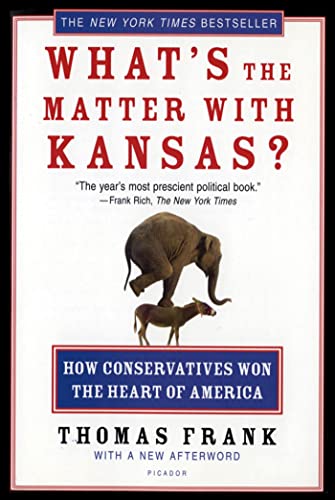
What drives millions of working people to vote against their own economic interests? Why do those struggling with stagnant wages and declining job security so often support policies that benefit the wealthy while eroding their own financial security? These profound questions lie at the heart of an essential exploration of American political consciousness and the mechanisms through which our culture manufactures consent and shapes our understanding of economics and social values.
This penetrating analysis examines the puzzling phenomenon of how conservative political movements have captured the hearts and minds of working-class Americans, even as their economic situations have deteriorated. The exploration reveals how resentment, cultural anxiety, and manufactured moral outrage have become substitutes for genuine economic advocacy. Through careful examination of political rhetoric, media narratives, and the symbolic battles that dominate public discourse, readers will discover the sophisticated machinery through which ordinary people are convinced to prioritize cultural grievances over material self-interest.
The investigation delves deeply into how a particular region of America—known for populist traditions and working-class solidarity—transformed into a bastion of right-wing politics that actively undermines the economic security of its own citizens. This transformation didn't happen by accident. Rather, it resulted from deliberate strategies deployed by political operatives and amplified through media systems that profit from division and emotional engagement rather than factual analysis.
One of the most valuable insights this work provides is an understanding of how language itself becomes a weapon in reshaping consciousness. By reframing economic struggles as moral and cultural failures rather than systemic problems, political movements have successfully redirected anger away from corporate exploitation toward scapegoated groups and cultural enemies. This linguistic manipulation represents one of the most insidious forms of social control, operating beneath conscious awareness while fundamentally altering how people understand their own circumstances.
For readers interested in personal and social transformation, recognizing these patterns is essential. How can we individually or collectively create meaningful change if we don't understand the psychological and cultural mechanisms that maintain exploitative systems? This exploration provides crucial consciousness-raising material for anyone seeking to understand how power operates in contemporary society.
The work also incorporates philosophical perspectives that challenge conventional thinking about consciousness, ideology, and social reproduction. These deeper theoretical frameworks help readers move beyond surface-level political analysis to understand the fundamental structures through which societies perpetuate themselves and reshape human consciousness to serve dominant interests.
The implications of this analysis extend far beyond electoral politics. Understanding how working people come to embrace policies contrary to their own welfare illuminates the broader question of how any system—whether economic, social, or personal—maintains itself against resistance and self-interest. These insights apply to personal growth work as well, revealing how we unconsciously participate in our own limitations and how awareness represents the first step toward liberation.
For those seeking authentic social consciousness, this material proves indispensable. It demonstrates that personal transformation cannot occur in isolation from understanding collective systems of manipulation and control. True growth requires recognizing how cultural narratives shape our thinking and actively working to develop critical consciousness that questions dominant narratives rather than passively accepting them.
The examination also offers hope by demonstrating that these systems, however powerful, depend upon human participation and belief. By understanding how manufactured consensus operates, readers gain the knowledge necessary to resist manipulation and participate in building alternative narratives and economic arrangements based on actual human welfare rather than elite enrichment.
This work ultimately serves as both a mirror and a compass—reflecting uncomfortable truths about how consciousness is shaped while pointing toward the critical awareness necessary for genuine transformation.