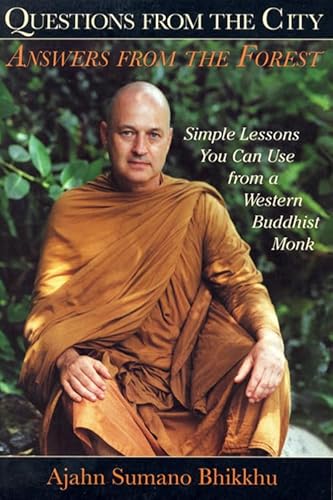










In our increasingly urbanized world, millions find themselves caught between the relentless pace of city living and an intuitive longing for something deeper, more authentic, and more connected to the natural rhythms of existence. This powerful collection bridges that gap by presenting profound spiritual insights drawn from decades of monastic forest living, offering practical wisdom that speaks directly to those navigating the complexities of modern urban existence.
The central premise is elegantly simple yet profoundly transformative: the forest has much to teach us, and those questions that plague city dwellers—about purpose, meaning, sustainability, and our relationship with the world around us—find their clearest answers through understanding our fundamental connection to nature and the principles that govern all living systems.
Throughout these pages, readers encounter a form of Buddhism rooted in direct experience and observation rather than abstract philosophy. The author draws from three decades spent in Thai forest monasteries, environments where simplicity, mindfulness, and close attention to the natural world form the foundation of daily practice. This experiential approach makes the teachings immediately relevant and applicable, whether you're sitting in a meditation hall or navigating a crowded city street.
One of the most valuable aspects explored here concerns our relationship with consumption and the environment. Urban life encourages endless accumulation—of possessions, experiences, status markers, and digital information. The forest perspective presented here gently challenges this pattern by demonstrating how simplicity and restraint lead not to deprivation but to profound freedom and peace. This isn't presented as dogma or guilt-inducing environmentalism but as practical wisdom about what actually satisfies human beings.
Readers will discover how the principles of natural systems—cycles of growth and decay, the necessity of rest and regeneration, the interdependence of all living things—directly apply to personal wellbeing and social health. Modern urban culture often operates against these natural principles, driving burnout, disconnection, and a sense of being fundamentally at odds with the world. Understanding and aligning with natural laws becomes not merely an environmental concern but a path to genuine wellness and contentment.
The teaching style throughout is notably accessible. Rather than dense philosophy, insights emerge through stories, observations, and direct questions addressed to the reader. Someone might wonder why they feel anxious despite material comfort, or why possessions purchased to bring happiness instead bring stress. These questions are met with responses grounded in natural observation and human psychology rather than religious doctrine, making the material valuable regardless of your spiritual background or belief system.
Particularly relevant for contemporary readers is the exploration of how our separation from nature creates psychological and social problems. Children raised in concrete environments without direct contact with soil, plants, and weather patterns develop differently than those with regular nature connection. Adults in cities often experience what might be called "nature deficit"—a lack of the grounding and perspective that comes from witnessing natural cycles and recognizing human existence as part of something infinitely larger than ourselves.
The environmental dimension here extends beyond recycling or carbon footprints into something more fundamental: how we think about our place in the world. An urban dweller who intellectually believes in sustainability might continue destructive patterns until they truly feel their connection to all living beings. This work facilitates that deeper shift in awareness.
What makes this collection particularly valuable is its refusal to romanticize nature or encourage escapism. Rather, it suggests that understanding forest wisdom allows us to live more consciously wherever we are. The insights about simplicity, mindfulness, interdependence, and alignment with natural principles become tools for creating more sustainable, meaningful lives within urban contexts.
For anyone sensing that current ways of living and thinking aren't serving us individually or collectively, this work offers both diagnosis and medicine—clarity about what's gone wrong and practical wisdom about how to realign ourselves with natural truth.