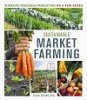















For those seeking to align their livelihood with their values, this comprehensive guide offers a transformative approach to growing food sustainably while building a thriving business. Whether you're dreaming of leaving corporate work, feeding your community with integrity, or reducing your ecological footprint, this resource bridges the gap between idealistic vision and practical reality.
The journey toward sustainable food production represents one of the most meaningful ways individuals can contribute to planetary healing while creating meaningful work. This guide recognizes that the modern food system carries profound environmental costs, yet offers readers a tangible alternative rooted in both ecological wisdom and proven business principles. By exploring how to grow diverse crops on a smaller scale while maintaining economic viability, the book demonstrates that profitability and environmental stewardship are not opposing forces but complementary goals.
The content unfolds as a practical masterclass in regenerative agriculture. Readers discover how to design market farms that work with natural systems rather than against them. Through detailed explanations of soil health, crop rotation, water management, and pest control, the book reveals how sustainable practices create more resilient growing systems. Rather than relying on chemical inputs that harm ecosystems and human health, this approach builds fertility through composting, cover cropping, and integrated pest management. These methods not only protect the environment but also produce nutritionally superior food that nourishes both body and spirit.
Beyond the agricultural techniques themselves, readers gain crucial business knowledge often missing from farming guides. Understanding pricing strategies, marketing approaches, and financial planning becomes essential for those committed to sustaining their operations long-term. The book addresses the real-world challenge that many well-intentioned farmers face: how to earn a dignified living while maintaining their environmental principles. This honest examination of economics ensures that idealism translates into sustainable practice rather than burnout and failure.
The content emphasizes diversity as both an ecological and economic principle. By growing a wide variety of crops rather than monocultural production, farmers create more stable ecosystems, reduce pest and disease pressure, and offer customers the colorful abundance that farmers markets and community-supported agriculture programs thrive upon. This diversity also distributes risk across multiple crops, providing greater financial security when weather or market conditions challenge individual crops.
For readers interested in food security and self-sufficiency, the book reveals how small-scale farming can meet real community needs. The emphasis on direct-to-consumer sales through farmers markets and subscription programs creates meaningful connections between growers and eaters. These relationships transform food from a commodity into a sacred exchange, where people understand and appreciate the care invested in their nourishment.
The spiritual and psychological dimensions of this work deserve recognition. Spending time in soil, witnessing seasonal cycles, and participating directly in the creation of life-sustaining food offers profound benefits for mental and emotional wellbeing. Many readers discover that sustainable farming provides not just food and income but also healing, purpose, and reconnection to natural rhythms that modern life often obscures.
For those concerned about climate change and environmental degradation, sustainable farming practices offer tangible hope. By building soil health and reducing reliance on industrial inputs, these methods sequester carbon while decreasing dependence on fossil fuel intensive agriculture. Each farm becomes a small but real contribution toward ecological restoration.
Whether you're contemplating a career transition, seeking to increase food self-sufficiency, or simply wanting to understand how truly sustainable food production works, this comprehensive resource provides both inspiration and practical guidance. It demonstrates that creating a livelihood aligned with ecological values remains possible, and that doing so enriches not only personal life but contributes meaningfully to the wellbeing of communities and the living world itself.