

















Chronic worry can feel like a prison, trapping us in endless cycles of "what if" thinking that drains our energy, disrupts our sleep, and prevents us from fully engaging with life. Yet worry isn't just a minor inconvenience or personality quirk—it's a learned mental habit that can be unmasked, understood, and ultimately transformed through practical psychological strategies grounded in cognitive behavioral therapy.
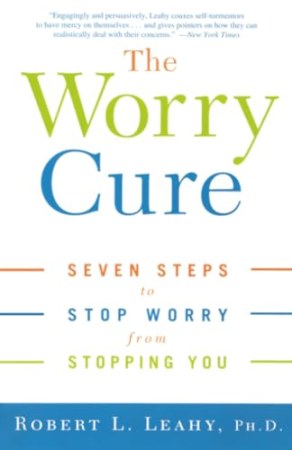
This comprehensive guide offers a revolutionary seven-step program designed to help readers break free from the worry cycle and reclaim their peace of mind. Rather than simply telling people to "stop worrying," this approach recognizes that worry serves psychological functions and must be addressed systematically. Readers will discover why their minds generate worry, what purpose it serves, and how to develop healthier ways of dealing with uncertainty and potential threats.
The journey begins with identifying worry patterns and understanding the difference between productive concern and unproductive rumination. Many people believe their worry is helpful—that it prepares them for disaster or demonstrates how much they care. Through clear explanations and revealing self-assessments, readers learn to recognize when worry has crossed the line from useful problem-solving into a self-defeating mental trap that creates more problems than it solves.
One of the most powerful insights offered is the concept of worry as an attempt to control the uncontrollable. When we cannot tolerate uncertainty, our minds generate elaborate scenarios in a futile attempt to prepare for every possible outcome. This creates the illusion of control while actually increasing anxiety and preventing effective action. Readers discover practical techniques for accepting uncertainty as an inevitable part of life rather than a threat that must be eliminated.
The program introduces specific cognitive strategies for challenging worry thoughts. Rather than accepting anxious predictions as facts, readers learn to examine the evidence, consider alternative explanations, and test their catastrophic assumptions against reality. Through guided exercises, they develop the ability to distinguish between possible and probable outcomes, to recognize thinking errors that fuel anxiety, and to generate more balanced perspectives on their concerns.
Beyond cognitive techniques, the material addresses the physical and emotional dimensions of worry. Readers explore how chronic worry affects the body, creating tension, fatigue, and various stress-related symptoms. Practical relaxation methods, mindfulness techniques, and strategies for managing physical anxiety help create a foundation of calm from which to address worried thoughts more effectively.
A particularly valuable section examines worry triggers and patterns, helping readers understand when and why their worry intensifies. Some people worry more in response to specific situations, while others find themselves caught in generalized anxiety that floats from one concern to another. By mapping their personal worry landscape, readers gain clarity about what drives their anxiety and can develop targeted interventions.
The program also tackles common obstacles to overcoming worry, including the fear that without worry, terrible things will happen, or that worry demonstrates responsibility and caring. These metacognitive beliefs—beliefs about the usefulness of worry itself—often keep people stuck in anxiety even when they recognize it's causing problems. Readers learn to challenge these beliefs and discover that they can be prepared, responsible, and caring without chronic worry.
Time management strategies and problem-solving skills round out the toolkit, offering practical alternatives to worry. Instead of ruminating endlessly about problems, readers learn structured approaches to identifying actionable concerns, generating solutions, and letting go of issues beyond their control. This transforms mental energy from unproductive spinning into effective action.
Throughout the material, real-world examples and relatable scenarios illustrate how these principles work in practice. Whether dealing with health concerns, relationship worries, financial anxiety, or the general uncertainty of modern life, readers find applicable wisdom and concrete techniques they can implement immediately.
The ultimate promise is not a worry-free life—an unrealistic goal—but rather a transformed relationship with worry itself. Readers learn to recognize worry as a mental event rather than reality, to respond skillfully rather than reactively, and to cultivate the peace of mind that comes from accepting uncertainty while taking meaningful action where possible.