




















Happiness & Success
Achieving Happiness Through Acceptance of Life
The quest for happiness often leads to frustration, as many fail to realize that the...

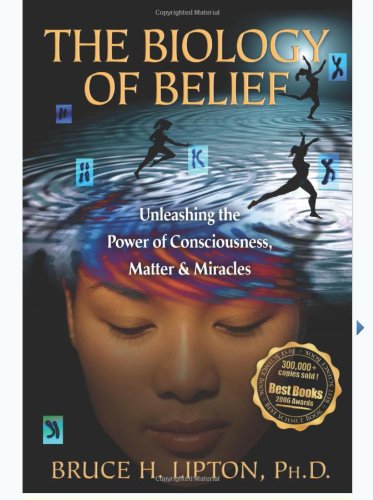
Revolutionary scientific discoveries are transforming our understanding of how cells actually function, and these insights have profound implications for anyone seeking to create abundance, success, and fulfillment in their professional life. By bridging the gap between cutting-edge cellular biology and practical application, a startling new perspective emerges about the role our beliefs play in shaping not just our health, but our entire reality—including our capacity to generate wealth and achieve career success.
For decades, conventional science taught that genes control our biology, creating a deterministic worldview where we are essentially victims of our heredity. This perspective has unconsciously influenced how people approach their careers and financial lives, often leading to limiting beliefs about what's possible based on family history, past failures, or perceived genetic limitations. However, groundbreaking research in epigenetics reveals something far more empowering: the environment, and more specifically our perception of the environment, actually controls gene expression. This means our beliefs, thoughts, and perceptions are literally sending signals to our cells that determine how they function and ultimately how we show up in the world.
Understanding this biological mechanism illuminates why some people seem to effortlessly attract opportunities while others struggle despite having similar skills and education. The membrane of every cell functions as a sophisticated information processor, responding to environmental signals and selecting appropriate genetic programs to run. When we hold beliefs about scarcity, unworthiness, or limitation, we're literally programming our cellular biology to operate from a survival-based consciousness. This state of protection and defensiveness closes us off from growth, creativity, and the ability to recognize and seize opportunities.
Read more ▼
Childhood Disrupted: How Your Biography Becomes Your Biology, and How You Can Heal
Donna Jackson Nakazawa

A Happy Pocket Full of Money: Infinite Wealth and Abundance in the Here and Now
David Cameron Gikandi

John Randolph Price

Fritjof Capra
The quest for happiness often leads to frustration, as many fail to realize that the...

Reaching sixty can evoke complex emotions, blending relief with ongoing ambition. This...

The quest for life's purpose often leads to unsatisfactory answers. This article...

Romantic love is a complex emotion shaped by historical, cultural, and biological...

Imagine going through one of the most physically and emotionally demanding experiences...

Have you ever argued over something that wasn't actually said? From cultural differences...

Daily actions often conflict with personal beliefs due to past experiences. By utilizing...

Therapists often use dream interpretation to delve into patients' emotions, but true...