














Happiness & Success
Achieving Happiness Through Acceptance of Life
The quest for happiness often leads to frustration, as many fail to realize that the...


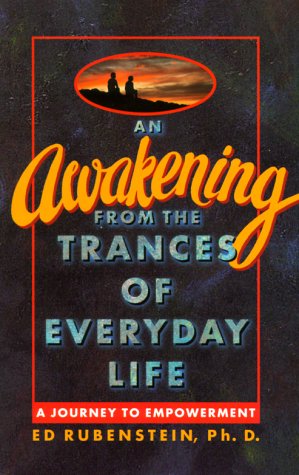
Journey into the foundations of human culture and discover how understanding our collective past can illuminate pathways to personal transformation and deeper self-awareness. This groundbreaking work of anthropological scholarship explores the universal patterns that connect all human societies, offering readers a mirror through which to examine their own beliefs, practices, and assumptions about the world.
At its core, this comprehensive study examines how human societies develop their systems of belief, ritual, custom, and meaning-making. By tracing the evolution of religious thought, mythological structures, and cultural practices across diverse civilizations, readers gain access to a profound understanding of how beliefs shape reality and how culture influences consciousness. The exploration moves through topics including animism, mythology, ritual practices, magic, and the development of religious and philosophical systems, demonstrating that seemingly disparate cultures share remarkable commonalities in their quest to understand existence and their place within it.
For those on a path of personal empowerment, this work offers invaluable insights into the origins of many beliefs and practices that continue to influence modern consciousness. Understanding that many contemporary spiritual practices and worldviews have ancient roots helps readers recognize patterns in their own thinking and behavior. This awareness becomes a powerful tool for conscious evolution, enabling individuals to distinguish between inherited cultural conditioning and authentic personal truth. When we understand that certain beliefs and practices emerged from specific historical and cultural contexts, we gain the freedom to choose consciously which elements serve our growth and which may be limiting our potential.
Read more ▼
Find and Follow Your Inner Compass
Barbara Berger

Michael Nylan

Jodie Forrest, Steven Forrest

Sohère Roked
The quest for happiness often leads to frustration, as many fail to realize that the...

Reaching sixty can evoke complex emotions, blending relief with ongoing ambition. This...

The quest for life's purpose often leads to unsatisfactory answers. This article...

Have you ever argued over something that wasn't actually said? From cultural differences...

Romantic love is a complex emotion shaped by historical, cultural, and biological...

Imagine going through one of the most physically and emotionally demanding experiences...

Daily actions often conflict with personal beliefs due to past experiences. By utilizing...

Therapists often use dream interpretation to delve into patients' emotions, but true...