














Happiness & Success
Achieving Happiness Through Acceptance of Life
The quest for happiness often leads to frustration, as many fail to realize that the...

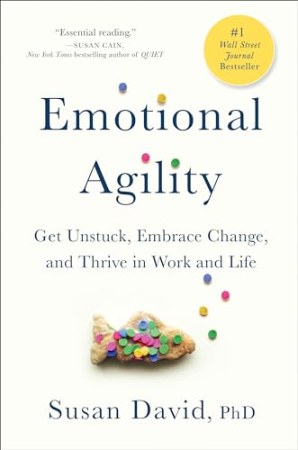
Our emotions don't have to control us, and yet so many of us find ourselves trapped in patterns of thinking and feeling that keep us stuck in place. We bottle up difficult emotions, hoping they'll disappear, or we brood endlessly over them, letting them dominate our days. We tell ourselves stories about who we are and what we're capable of, then live within those narrow boundaries even when they no longer serve us. This groundbreaking exploration of how to work with our inner world rather than against it offers a radically different approach to navigating life's inevitable challenges and changes.
At the heart of this transformative work lies a deceptively simple yet powerful truth: rigidity breeds suffering, while flexibility creates resilience. Drawing on more than twenty years of research in emotions and behavior change, combined with insights from thousands of clients and organizations worldwide, this comprehensive guide presents a science-based approach to thriving in an increasingly complex and uncertain world. The central premise challenges much of what popular psychology has taught us about positive thinking and emotional control, revealing why trying to push away negative emotions or force ourselves to "just be positive" actually backfires, keeping us more stuck than ever.
The framework introduced here rests on four essential moves that together create genuine psychological agility. First comes showing up to our experiences with openness and curiosity rather than judgment and avoidance. This means learning to face our thoughts and emotions, even uncomfortable ones, without letting them overwhelm us or dictate our actions. Second involves stepping out from our internal chatter to observe our thoughts and feelings with some distance, recognizing that thoughts are just thoughts, not facts, and emotions are temporary signals rather than commands. Third focuses on walking toward what truly matters by identifying our core values and using them as a compass for decision-making. Finally, the framework emphasizes moving on with small, deliberate actions aligned with those values, creating sustainable change through flexibility and experimentation rather than rigid rules.
Read more ▼
David DeSteno

John M. Barry, Amelia Pérez de Villlar, John M. Barry
Viktor E. Frankl
Daniel J. Levitin
The quest for happiness often leads to frustration, as many fail to realize that the...

Reaching sixty can evoke complex emotions, blending relief with ongoing ambition. This...

The quest for life's purpose often leads to unsatisfactory answers. This article...

Romantic love is a complex emotion shaped by historical, cultural, and biological...

Imagine going through one of the most physically and emotionally demanding experiences...

Have you ever argued over something that wasn't actually said? From cultural differences...

Daily actions often conflict with personal beliefs due to past experiences. By utilizing...

Therapists often use dream interpretation to delve into patients' emotions, but true...