
















Happiness & Success
Achieving Happiness Through Acceptance of Life
The quest for happiness often leads to frustration, as many fail to realize that the...

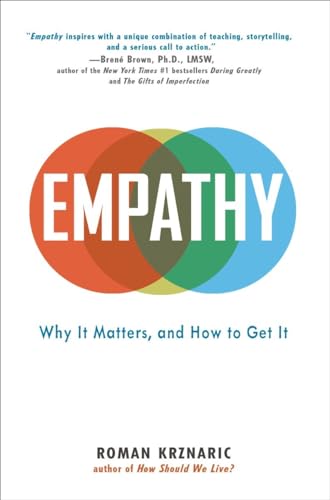
Discovering the transformative power of stepping into another person's shoes can revolutionize not only our personal relationships but also reshape our entire approach to living in an interconnected world. This illuminating exploration reveals how cultivating the ability to understand and share the feelings of others represents one of humanity's most essential yet underdeveloped capacities—one that holds the key to creating more meaningful connections, resolving conflicts, and building a more compassionate society.
At its core, this work challenges the prevailing cultural obsession with self-focus and introspection, proposing instead that genuine personal growth comes through reaching outward toward others. Drawing on fascinating insights from neuroscience, psychology, philosophy, and history, readers encounter a compelling argument for why understanding others' emotions and perspectives isn't merely a nice trait to possess but rather a fundamental skill that can be intentionally developed and strengthened throughout life.
The journey begins by dismantling common misconceptions about what it truly means to connect with another person's experience. Many confuse sympathy with genuine understanding, or mistake emotional contagion for meaningful connection. Here, readers learn to recognize authentic perspective-taking that goes beyond surface-level concern to achieve deep comprehension of another's inner world. Through vivid examples ranging from healthcare to criminal justice, from family dynamics to international conflicts, the material demonstrates how this capacity operates across every domain of human interaction.
Read more ▼
Healthy posture for babies and children
Kathleen Porter
Marshall B. Rosenberg, Deepak Chopra, Magiarí Díaz Díaz, Alan Rafael Seid Llamas, Rosenberg

The Conspiracy Against Childhood
Eda J. Le Shan
Pamela Bloom, Joan Halifax Roshi
The quest for happiness often leads to frustration, as many fail to realize that the...

Reaching sixty can evoke complex emotions, blending relief with ongoing ambition. This...

The quest for life's purpose often leads to unsatisfactory answers. This article...

Romantic love is a complex emotion shaped by historical, cultural, and biological...

Imagine going through one of the most physically and emotionally demanding experiences...

Have you ever argued over something that wasn't actually said? From cultural differences...

Daily actions often conflict with personal beliefs due to past experiences. By utilizing...

Therapists often use dream interpretation to delve into patients' emotions, but true...