














Happiness & Success
Achieving Happiness Through Acceptance of Life
The quest for happiness often leads to frustration, as many fail to realize that the...


At the intersection of quantum physics and consciousness lies a revolutionary framework for understanding reality that challenges our most fundamental assumptions about existence, perception, and the nature of mind itself. This groundbreaking work invites readers on a profound journey into a vision of the universe where everything is interconnected in ways that transcend our ordinary experience of separate objects and isolated events.
The central premise revolves around a radical reconception of order in the universe. Rather than viewing reality as composed of independent parts that interact mechanically, we are introduced to the concept of an implicate order—a deeper, enfolded dimension of existence from which all manifest phenomena emerge. Like the hologram, where each fragment contains information about the whole image, this hidden order enfolds the entirety of existence within each region of space and time. What we perceive as separate things and events in our everyday world—the explicate order—are merely unfolded projections from this deeper, unified realm.
This perspective offers profound implications for personal transformation and empowerment. By recognizing that fragmentation is primarily a feature of our thought and perception rather than an inherent characteristic of reality itself, we gain access to a more holistic way of engaging with life. The divisions we create between mind and matter, observer and observed, self and world, begin to dissolve when viewed through this lens. Understanding these artificial boundaries opens pathways to greater integration, coherence, and wholeness in our personal experience.
Read more ▼
Antony J. Haynes
Hugh Prather
Barbara Marx Hubbard
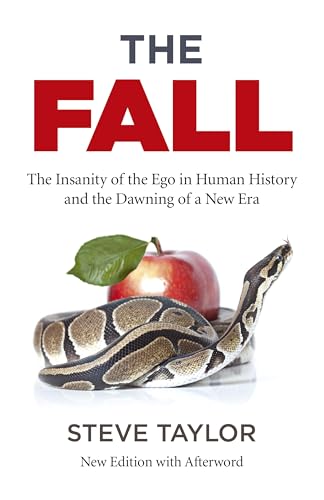
Steve Taylor
The quest for happiness often leads to frustration, as many fail to realize that the...

Reaching sixty can evoke complex emotions, blending relief with ongoing ambition. This...

The quest for life's purpose often leads to unsatisfactory answers. This article...

Romantic love is a complex emotion shaped by historical, cultural, and biological...

Imagine going through one of the most physically and emotionally demanding experiences...

Have you ever argued over something that wasn't actually said? From cultural differences...

Daily actions often conflict with personal beliefs due to past experiences. By utilizing...

Therapists often use dream interpretation to delve into patients' emotions, but true...