
Happiness & Success
Achieving Happiness Through Acceptance of Life
The quest for happiness often leads to frustration, as many fail to realize that the...








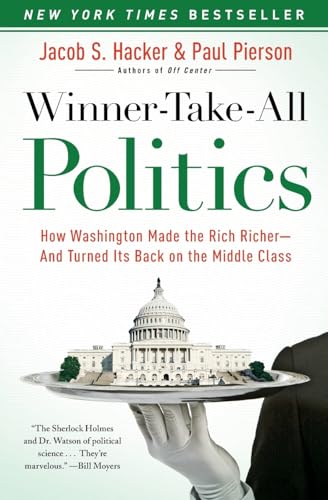
For decades, Americans have witnessed a troubling transformation in their economic landscape. While worker productivity has soared and the economy has grown, the rewards have flowed overwhelmingly to those at the very top, leaving middle-class families struggling with stagnant wages, declining benefits, and increasing insecurity. This groundbreaking analysis reveals how this dramatic shift didn't happen by accident or through inevitable market forces, but through deliberate political choices made in Washington over the past thirty years.
At the heart of this examination lies a provocative thesis: the widening gap between the wealthy and everyone else stems not from globalization, technological change, or natural economic evolution alone, but from a systematic reshaping of American policy through political action. Readers will discover how organized interests and their allies methodically transformed the rules governing the economy, creating a system where gains flow upward while risks cascade downward. This transformation represents one of the most significant yet underappreciated shifts in modern American democracy.
Through meticulous research and compelling evidence, readers gain insight into the machinery of contemporary politics that most citizens never see. The narrative traces how business interests became increasingly organized and sophisticated in their political engagement starting in the 1970s, while labor unions weakened and middle-class Americans found themselves with diminishing political voice. This wasn't merely about lobbying or campaign contributions, though both played roles. It involved a comprehensive strategy to reshape public debate, influence expert opinion, and ultimately rewrite the rules governing everything from taxation to labor relations to financial regulation.
Read more ▼
Marcia Millman
On Tyranny: Twenty Lessons From the Twentieth Century
Timothy Snyder
Russell Brand
The myth of freedom and the way of meditation
Chögyam Trungpa
The quest for happiness often leads to frustration, as many fail to realize that the...

Reaching sixty can evoke complex emotions, blending relief with ongoing ambition. This...

The quest for life's purpose often leads to unsatisfactory answers. This article...

Romantic love is a complex emotion shaped by historical, cultural, and biological...

Imagine going through one of the most physically and emotionally demanding experiences...

Daily actions often conflict with personal beliefs due to past experiences. By utilizing...

Have you ever argued over something that wasn't actually said? From cultural differences...

Therapists often use dream interpretation to delve into patients' emotions, but true...