
Health & Wellness
Promoting Mental Health with the ABC Approach
The Act-Belong-Commit model offers a straightforward strategy to enhance mental health by encouraging individuals to stay active, build connections, and commit to meaningful...

















 As a boy in late-1940s Memphis, my dad got a nickel every Friday evening to come by the home of a Russian Jewish immigrant named Harry Levenson and turn on his lights, since the Torah forbids lighting a fire in your home on the Sabbath. My father would wonder, however, if he were somehow sinning.
 If you plan to try and quit eating junk food, expect to suffer similar withdrawal-type symptoms—at least during the initial week—that addicts experience when they attempt to quit using drugs, according to new research.
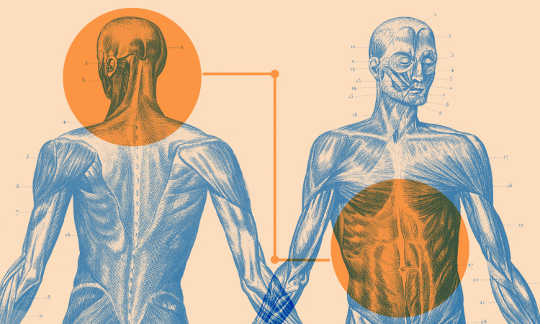 New research with mice may upend our understanding of the connection between the gut and the brain, as well as appetite. If you’ve ever felt nauseous before an important presentation, or foggy after a big meal, then you know the power of the gut-brain connection.

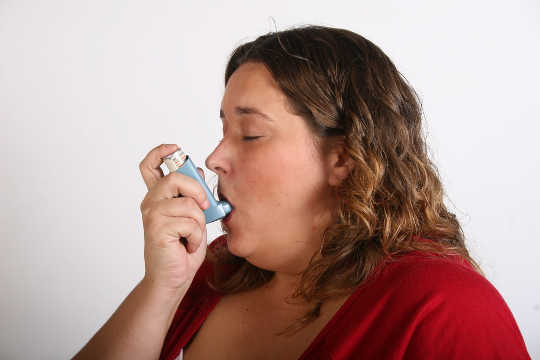 Obesity changes how airway muscles function, which increases the risk of developing asthma, a new study suggests. The prevalence of asthma and obesity—as both separate and coexisting conditions—has grown considerably in the United States in recent years.
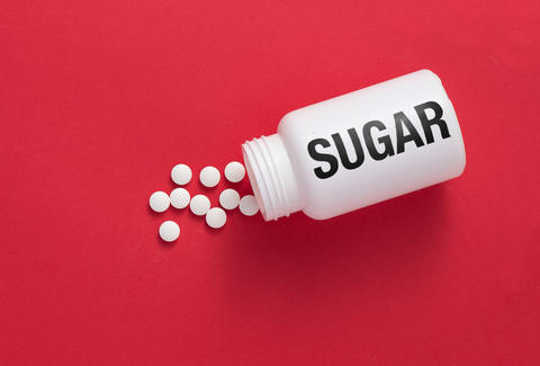 Researchers have developed a way to reliably predict which chronic pain patients will respond to a sugar placebo pill based on brain anatomy and psychological characteristics. Doctors may one day prescribe placebos that work as effectively as any painkiller for certain patients, the researchers’ new study suggests
 Researchers have discovered evidence of the earliest brewmasters to date, a finding that might stir an old debate: What came first, beer or bread? In a cave in what is now Israel, scientists found beer-brewing innovations that they believe predate the early appearance of cultivated cereals in the Near East by several millennia.
 Two of every three US consumers surveyed report eating less of at least one type of meat, according to new research. “Many Americans continue to have strong preferences for meat,” says Roni Neff, an assistant professor of environmental health and engineering at Johns Hopkins University.
 Walking significantly lowers the risk of heart failure in older women, a new study shows. The study of more than 137,000 postmenopausal women aged 50 to 79 is the largest and most comprehensive to date that has evaluated physical activity within the context of heart failure prevention.
 Suicide rates in the United States have increased by 25-30 percent since 1999. This is particularly true for youth ages 12-24, with increases of approximately 30 percent over the same period. In Alachua County, Florida, where I teach and practice at the University of Florida, the base rate for suicides among youth ages 12-17 had been about five per 100,000 for many years, below the base national rate of 13 per 100,000. However, in the year 2017 that rate of completed suicides increased to 27 per 100,000, and for 2018 we are at a pace that will likely equal 2017.
 No matter how much we try to minimise our exposure to respiratory viruses, it’s far more difficult in winter when we spend so much time in close proximity to other people.
 Leftovers may be throwing off your sense of how much you’ve actually eaten and how much you need to exercise, particularly as portion sizes—and therefore leftover portions—increase, according to a new study.