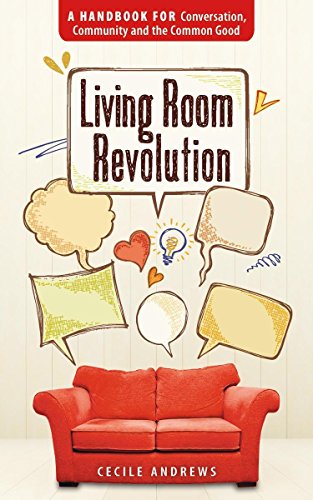




What if the most transformative political movement of our time isn't happening in government buildings or at massive rallies, but in living rooms across the country? What if genuine democracy revival begins not with voting alone, but with neighbors gathering together to imagine and build a different kind of society?
This exploration ventures into the heart of grassroots activism and democratic renewal, revealing how ordinary people in ordinary spaces are fundamentally reshaping what it means to be engaged citizens. The focus here is on the voluntary simplicity movement and how it intersects with political consciousness, social change, and the rekindling of authentic community bonds that have eroded in our consumer-driven culture.
At its core, this examination challenges the assumption that meaningful political change must come from the top down or through traditional institutional channels. Instead, it presents a compelling case that real transformation emerges when individuals examine their own consumption patterns, question the cultural narratives that drive endless acquisition, and recognize how these personal choices directly connect to broader social and environmental crises. The movement toward simpler living isn't merely about owning fewer possessions or reducing one's carbon footprint, though these are certainly components. Rather, it's fundamentally about reclaiming agency, reconnecting with neighbors, and building alternative systems that prioritize human flourishing over corporate profit.
Readers will discover how stepping back from the treadmill of consumerism creates both psychological freedom and practical space for civic engagement. When people spend less time working to pay for things they don't need, they suddenly have time for what truly matters: conversations with neighbors, participation in local governance, skill-sharing, and collective problem-solving. This reframing of what constitutes a successful life becomes inherently political because it challenges the dominant economic system that benefits from keeping citizens isolated, exhausted, and distracted.
The framework presented here connects personal transformation with social transformation in ways that feel both intellectually rigorous and emotionally resonant. Readers seeking to understand how individual choices ripple outward into community change will find validation for their instincts that something is profoundly wrong with how we've organized modern life. There's recognition that the isolation we experience, the anxiety about never having enough, and the relentless marketing that preys on our insecurities are not accidents of capitalism but features designed to maintain control and prevent collective organizing.
Throughout this exploration, there's consistent emphasis on how gathering in living rooms creates democratic spaces where real dialogue becomes possible. These intimate settings allow for the kind of vulnerability and honesty that rarely occurs in larger public forums. People share their struggles with debt, their exhaustion from working multiple jobs, their despair about environmental destruction, and their hunger for meaning. From this shared vulnerability emerges both personal healing and political consciousness.
The broader implications extend to questions about the future of democracy itself. In an era of increasing polarization, corporate influence in government, and citizen disengagement, here emerges a model suggesting that renewal happens through local networks of people committed to living differently and thinking more critically about systemic problems. The philosophy emphasizes that you don't need permission from authorities to begin building the world you want to see.
Readers will gain practical inspiration for how to begin conversations in their own communities, how to question consumption patterns without judgment, and how to recognize that living with less isn't deprivation but liberation. Perhaps most importantly, they'll understand that the revolution isn't coming someday in some distant future, but is already happening wherever people gather to imagine alternatives to the status quo.