












Happiness & Success
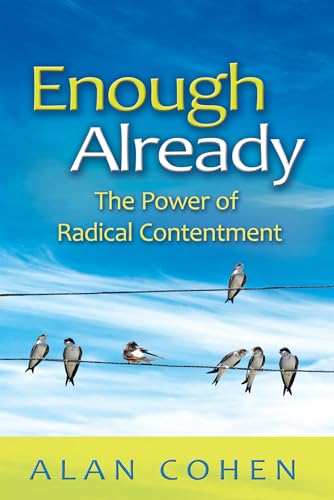
Achieving Happiness Through Acceptance of Life
The quest for happiness often leads to frustration, as many fail to realize that the...

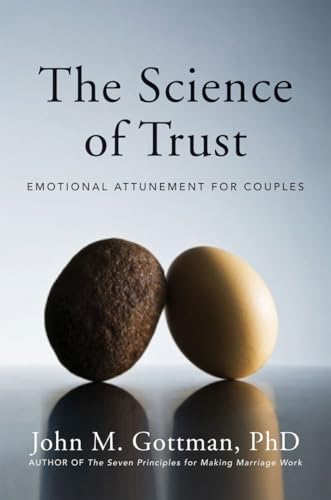
Understanding the dynamics of trust transforms not only our intimate relationships but also revolutionizes how we navigate professional environments, build career success, and create prosperity in all areas of life. This groundbreaking work reveals decades of scientific research into what makes relationships succeed or fail, offering a mathematical precision to understanding human connection that has profound implications for anyone seeking to advance their career, lead effectively, or build sustainable business partnerships.
Drawing from over forty years of laboratory research involving thousands of couples, this exploration into the mechanics of trust provides concrete, measurable insights into human behavior that apply far beyond romantic relationships. The research methodology is remarkable in its rigor, using mathematical modeling, physiological measurements, and longitudinal studies to identify the exact patterns that predict relationship success or failure with over ninety percent accuracy. These same patterns govern workplace dynamics, professional partnerships, client relationships, and every interaction where trust either flourishes or deteriorates.
At the heart of this work lies the concept of emotional attunement and its direct impact on building what can be called "relational wealth." Just as financial wealth requires consistent deposits and wise management, relational capital in professional settings demands specific, measurable behaviors. The research identifies the precise ratio of positive to negative interactions necessary for relationships to thrive, revealing that successful partnerships require a five-to-one ratio of positive to negative moments. This finding has transformative implications for managers, entrepreneurs, sales professionals, and anyone whose career success depends on building lasting professional relationships.
Read more ▼
'Nature and the Greeks' and 'Science and Humanism'
Erwin Schrödinger

Michael Fekete

The Child and the Machine: How Computers Put Our Children's Education at Risk
Alison Armstrong, Charles Casement
Fritjof Capra, Michael Prichard
The quest for happiness often leads to frustration, as many fail to realize that the...

Reaching sixty can evoke complex emotions, blending relief with ongoing ambition. This...

The quest for life's purpose often leads to unsatisfactory answers. This article...

Romantic love is a complex emotion shaped by historical, cultural, and biological...

Imagine going through one of the most physically and emotionally demanding experiences...

Have you ever argued over something that wasn't actually said? From cultural differences...

Daily actions often conflict with personal beliefs due to past experiences. By utilizing...

Therapists often use dream interpretation to delve into patients' emotions, but true...