


















# Understanding Your Child's Brain: Building Emotional Intelligence for a Conscious Future
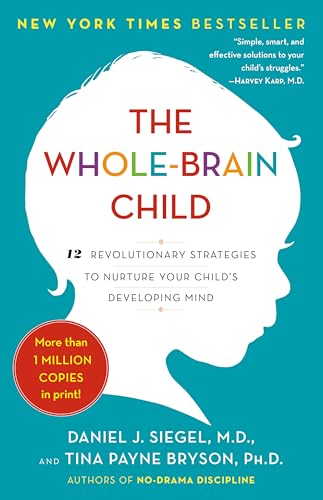
Understanding how children's brains develop is one of the most transformative insights a parent, educator, or caregiver can gain. This groundbreaking work offers twelve practical strategies grounded in neuroscience that fundamentally change how we approach childhood development, emotional regulation, and the cultivation of conscious, emotionally intelligent citizens for our future society.
The core of this approach rests on a revolutionary idea: children's brains are not fully formed, and the way we interact with them during their crucial developmental years literally shapes the neural architecture of their minds. When you understand this biological reality, parenting transforms from a series of reactive responses to a mindful practice of intentional brain-building. This matters profoundly not just for individual families, but for the health of our democratic society, which depends on citizens capable of emotional intelligence, critical thinking, and prosocial behavior.
Readers will discover how the developing brain comprises multiple regions that must learn to work together in integrated harmony. The lower brain, responsible for survival instincts and emotional reactions, operates long before the higher brain develops reasoning and self-control. One of the most liberating insights this work offers is that when children have emotional meltdowns or behavioral challenges, their brains are literally not yet equipped to handle the situation. This understanding replaces frustration and blame with compassion and effective intervention.
Throughout these pages, you'll learn practical strategies for responding to your child's emotional upheavals in ways that don't just manage behavior in the moment, but actually help wire their brains toward greater emotional resilience and integration. These strategies include specific techniques for connecting with your child during distress before attempting to redirect behavior, understanding the crucial difference between left-brain logic and right-brain emotional processing, and how to help your child develop the crucial capacity for self-awareness that becomes the foundation for all learning and healthy relationships.
The implications of this knowledge extend far beyond the individual family. A society composed of people who learned early in life to understand, regulate, and make conscious choices about their emotions is a society capable of more thoughtful democratic participation, more empathetic community engagement, and greater social cohesion. When children develop what neuroscience calls "mindsight," the ability to look inward and understand their own mental processes, they become adults capable of looking into the minds of others with understanding and compassion. This is the psychological and neurological foundation of genuine democracy.
You'll also explore how trauma and stress affect the developing brain, and equally important, how understanding these mechanisms allows parents and caregivers to become healing agents in children's lives. The strategies presented are not punishment-based or shame-inducing; rather, they work with the brain's natural capacity for growth and change. This approach represents a fundamental departure from traditional parenting advice that often relies on control, consequences, and suppression of emotions.
The practical strategies covered include specific language to use during conflicts, ways to make sense of confusing emotions through storytelling, techniques for helping children develop impulse control, and methods for teaching them to be aware of their own thoughts and feelings. Each strategy is explained with clarity and backed by current neuroscientific research, yet presented in accessible, everyday language.
By engaging with this material, readers gain more than parenting techniques. They gain a sophisticated understanding of human development that can inform their role as citizens, educators, and community members. They develop the capacity to see children's behavior through a lens of compassion rather than judgment, and this same compassion and understanding can extend to the broader social challenges our society faces. In building whole-brained children, we are literally building the foundation for a more conscious, emotionally intelligent, and ultimately more democratic society.